> ## Documentation Index
> Fetch the complete documentation index at: https://mcp.developerdoc.cn/llms.txt
> Use this file to discover all available pages before exploring further.
# 连接本地 MCP 服务器
> 了解如何通过本地 MCP 服务器扩展 Claude Desktop,实现文件系统访问和其他强大集成
Model Context Protocol(MCP)服务器通过对本地资源和工具提供安全、受控的访问,扩展 AI 应用的能力。许多客户端都支持 MCP,因此可以在不同平台和应用之间实现多样化集成。
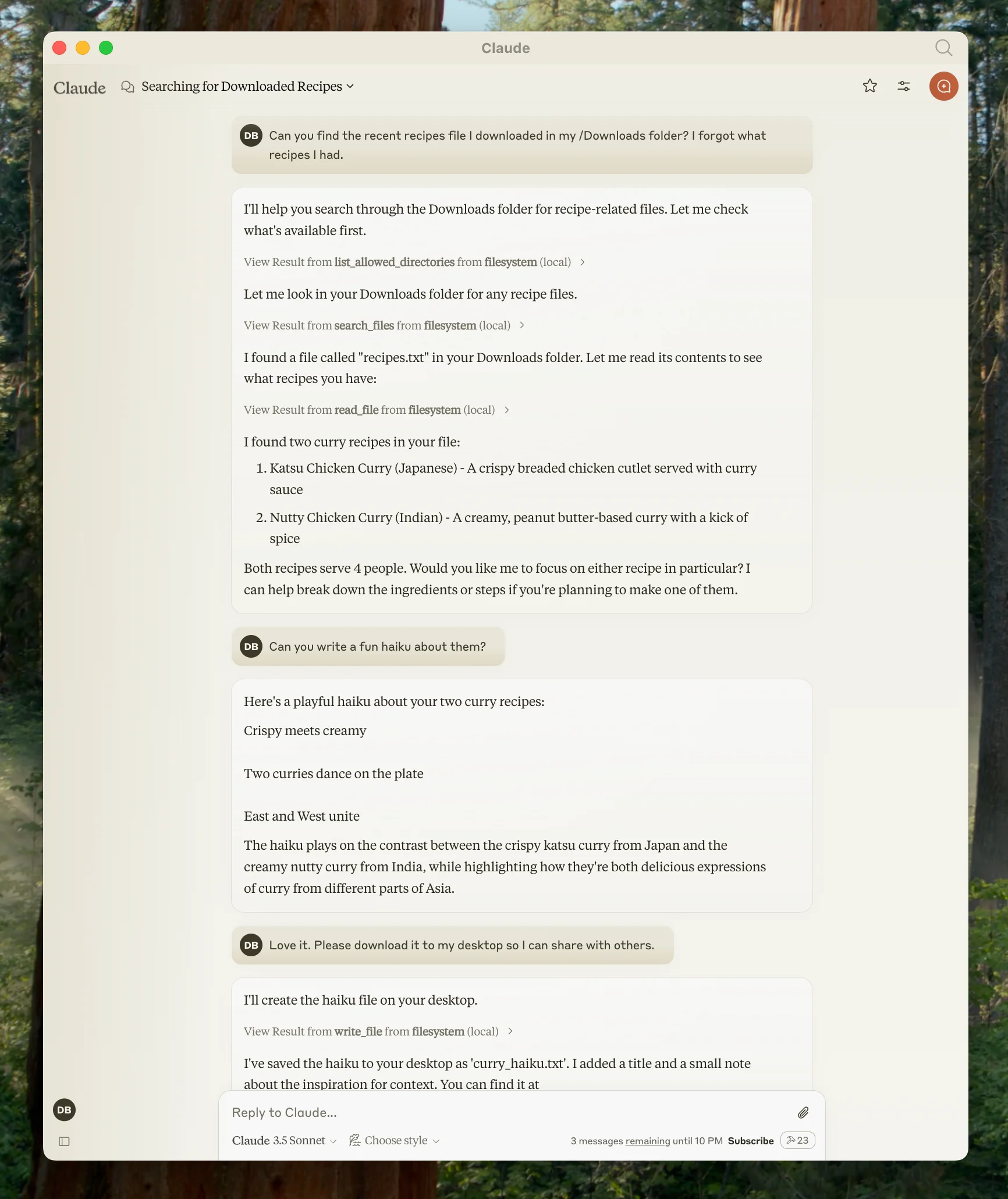
本指南以 Claude Desktop 作为示例,演示如何连接本地 MCP 服务器。Claude Desktop 只是众多支持 MCP 的客户端之一;虽然本文聚焦它的实现方式,但这些概念也广泛适用于其他兼容 MCP 的客户端。完成本教程后,Claude 将能够与你电脑上的文件交互、创建新文档、整理文件夹,并搜索文件系统,而且每个动作都需要你的明确许可。
 ## 前置条件
开始本教程前,请确保你的系统已安装以下内容:
### Claude Desktop
下载并安装适合你操作系统的 [Claude Desktop](https://claude.ai/download)。Claude Desktop 支持 macOS 和 Windows。
如果你已经安装 Claude Desktop,请点击 Claude 菜单并选择 “Check for Updates...”,确认当前运行的是最新版本。
### Node.js
Filesystem Server 和许多其他 MCP 服务器都需要 Node.js 才能运行。打开终端或命令提示符,运行以下命令检查 Node.js 安装:
```bash theme={null}
node --version
```
如果尚未安装 Node.js,请从 [nodejs.org](https://nodejs.org/) 下载。为了稳定性,建议使用 LTS(Long Term Support)版本。
## 理解 MCP 服务器
MCP 服务器是在你的电脑上运行的程序,并通过标准化协议向 Claude Desktop 提供特定能力。每个服务器都会暴露 Claude 可使用的 tools,并且执行动作前需要你的批准。本文将安装的 Filesystem Server 提供以下 tools:
* 读取文件内容和目录结构
* 创建新文件和目录
* 移动和重命名文件
* 按名称或内容搜索文件
所有动作执行前都需要你的明确批准,确保你完全控制 Claude 可以访问和修改的内容。
## 安装 Filesystem Server
安装过程需要配置 Claude Desktop,使其在启动应用时自动启动 Filesystem Server。这个配置通过一个 JSON 文件完成,用来告诉 Claude Desktop 要运行哪些服务器,以及如何连接它们。
首先进入 Claude Desktop 设置。点击系统菜单栏中的 Claude 菜单(不是 Claude 窗口内部的设置),然后选择 “Settings...”。
在 macOS 上,它会出现在顶部菜单栏中:
## 前置条件
开始本教程前,请确保你的系统已安装以下内容:
### Claude Desktop
下载并安装适合你操作系统的 [Claude Desktop](https://claude.ai/download)。Claude Desktop 支持 macOS 和 Windows。
如果你已经安装 Claude Desktop,请点击 Claude 菜单并选择 “Check for Updates...”,确认当前运行的是最新版本。
### Node.js
Filesystem Server 和许多其他 MCP 服务器都需要 Node.js 才能运行。打开终端或命令提示符,运行以下命令检查 Node.js 安装:
```bash theme={null}
node --version
```
如果尚未安装 Node.js,请从 [nodejs.org](https://nodejs.org/) 下载。为了稳定性,建议使用 LTS(Long Term Support)版本。
## 理解 MCP 服务器
MCP 服务器是在你的电脑上运行的程序,并通过标准化协议向 Claude Desktop 提供特定能力。每个服务器都会暴露 Claude 可使用的 tools,并且执行动作前需要你的批准。本文将安装的 Filesystem Server 提供以下 tools:
* 读取文件内容和目录结构
* 创建新文件和目录
* 移动和重命名文件
* 按名称或内容搜索文件
所有动作执行前都需要你的明确批准,确保你完全控制 Claude 可以访问和修改的内容。
## 安装 Filesystem Server
安装过程需要配置 Claude Desktop,使其在启动应用时自动启动 Filesystem Server。这个配置通过一个 JSON 文件完成,用来告诉 Claude Desktop 要运行哪些服务器,以及如何连接它们。
首先进入 Claude Desktop 设置。点击系统菜单栏中的 Claude 菜单(不是 Claude 窗口内部的设置),然后选择 “Settings...”。
在 macOS 上,它会出现在顶部菜单栏中:
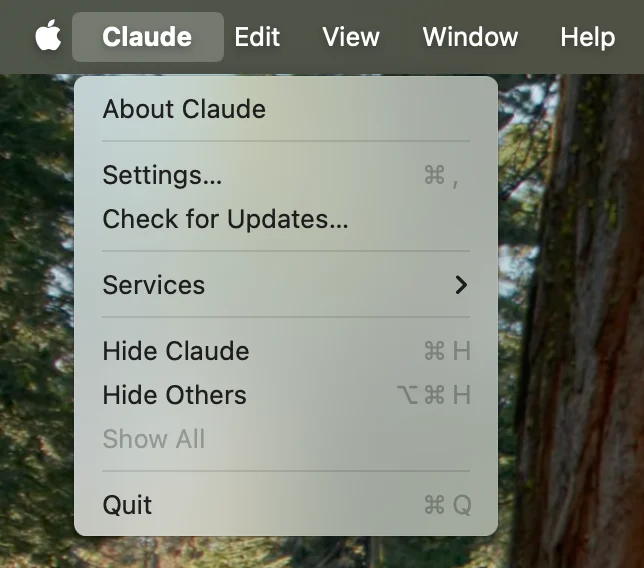 这会打开 Claude Desktop 配置窗口,它与 Claude 账户设置是分开的。
在 Settings 窗口中,进入左侧边栏的 “Developer” 标签页。这里包含配置 MCP 服务器和其他开发者功能的选项。
点击 “Edit Config” 按钮打开配置文件:
这会打开 Claude Desktop 配置窗口,它与 Claude 账户设置是分开的。
在 Settings 窗口中,进入左侧边栏的 “Developer” 标签页。这里包含配置 MCP 服务器和其他开发者功能的选项。
点击 “Edit Config” 按钮打开配置文件:
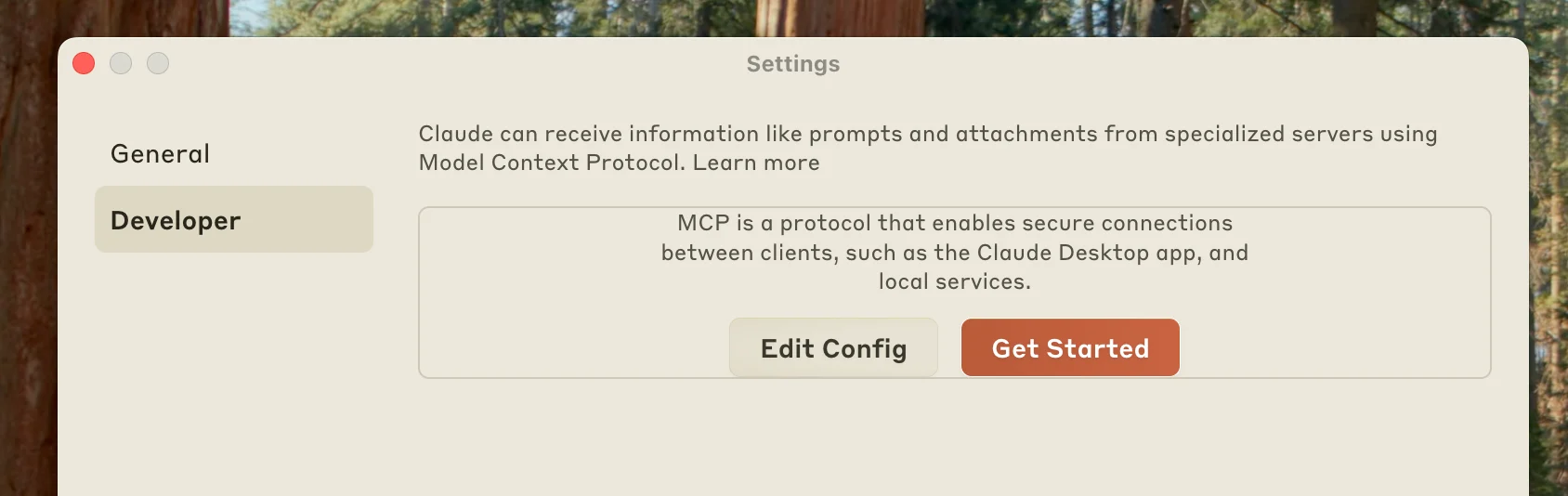 如果配置文件不存在,这个操作会创建一个新文件;如果已经存在,则会打开现有配置。文件位置如下:
* **macOS**: `~/Library/Application Support/Claude/claude_desktop_config.json`
* **Windows**: `%APPDATA%\Claude\claude_desktop_config.json`
将配置文件内容替换为以下 JSON 结构。该配置会告诉 Claude Desktop 启动 Filesystem Server,并允许它访问特定目录:
```json macOS theme={null}
{
"mcpServers": {
"filesystem": {
"command": "npx",
"args": [
"-y",
"@modelcontextprotocol/server-filesystem",
"/Users/username/Desktop",
"/Users/username/Downloads"
]
}
}
}
```
```json Windows theme={null}
{
"mcpServers": {
"filesystem": {
"command": "npx",
"args": [
"-y",
"@modelcontextprotocol/server-filesystem",
"C:\\Users\\username\\Desktop",
"C:\\Users\\username\\Downloads"
]
}
}
}
```
将 `username` 替换为你电脑上的实际用户名。`args` 数组中的路径指定 Filesystem Server 可以访问哪些目录。你可以根据需要修改这些路径,或添加更多目录。
**理解配置**
* `"filesystem"`:服务器在 Claude Desktop 中显示的友好名称。
* `"command": "npx"`:使用 Node.js 的 npx 工具运行服务器。
* `"-y"`:自动确认安装服务器包。
* `"@modelcontextprotocol/server-filesystem"`:Filesystem Server 的包名。
* 其余参数:允许服务器访问的目录。
**安全注意事项**
只授权 Claude 读取和修改你愿意开放的目录。服务器会以你的用户账户权限运行,因此它可以执行你手动能执行的任何文件操作。
保存配置文件后,完全退出 Claude Desktop 并重新启动。应用需要重启才能加载新配置并启动 MCP 服务器。
重启成功后,你会在对话输入框右下角看到 MCP server 指示器
如果配置文件不存在,这个操作会创建一个新文件;如果已经存在,则会打开现有配置。文件位置如下:
* **macOS**: `~/Library/Application Support/Claude/claude_desktop_config.json`
* **Windows**: `%APPDATA%\Claude\claude_desktop_config.json`
将配置文件内容替换为以下 JSON 结构。该配置会告诉 Claude Desktop 启动 Filesystem Server,并允许它访问特定目录:
```json macOS theme={null}
{
"mcpServers": {
"filesystem": {
"command": "npx",
"args": [
"-y",
"@modelcontextprotocol/server-filesystem",
"/Users/username/Desktop",
"/Users/username/Downloads"
]
}
}
}
```
```json Windows theme={null}
{
"mcpServers": {
"filesystem": {
"command": "npx",
"args": [
"-y",
"@modelcontextprotocol/server-filesystem",
"C:\\Users\\username\\Desktop",
"C:\\Users\\username\\Downloads"
]
}
}
}
```
将 `username` 替换为你电脑上的实际用户名。`args` 数组中的路径指定 Filesystem Server 可以访问哪些目录。你可以根据需要修改这些路径,或添加更多目录。
**理解配置**
* `"filesystem"`:服务器在 Claude Desktop 中显示的友好名称。
* `"command": "npx"`:使用 Node.js 的 npx 工具运行服务器。
* `"-y"`:自动确认安装服务器包。
* `"@modelcontextprotocol/server-filesystem"`:Filesystem Server 的包名。
* 其余参数:允许服务器访问的目录。
**安全注意事项**
只授权 Claude 读取和修改你愿意开放的目录。服务器会以你的用户账户权限运行,因此它可以执行你手动能执行的任何文件操作。
保存配置文件后,完全退出 Claude Desktop 并重新启动。应用需要重启才能加载新配置并启动 MCP 服务器。
重启成功后,你会在对话输入框右下角看到 MCP server 指示器  :
:
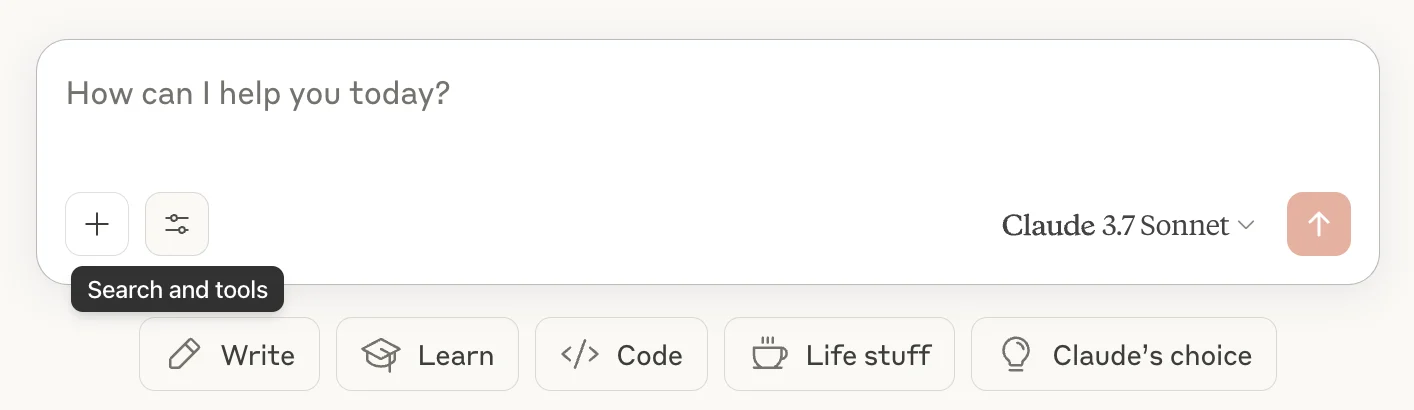 点击该指示器可以查看 Filesystem Server 提供的可用 tools:
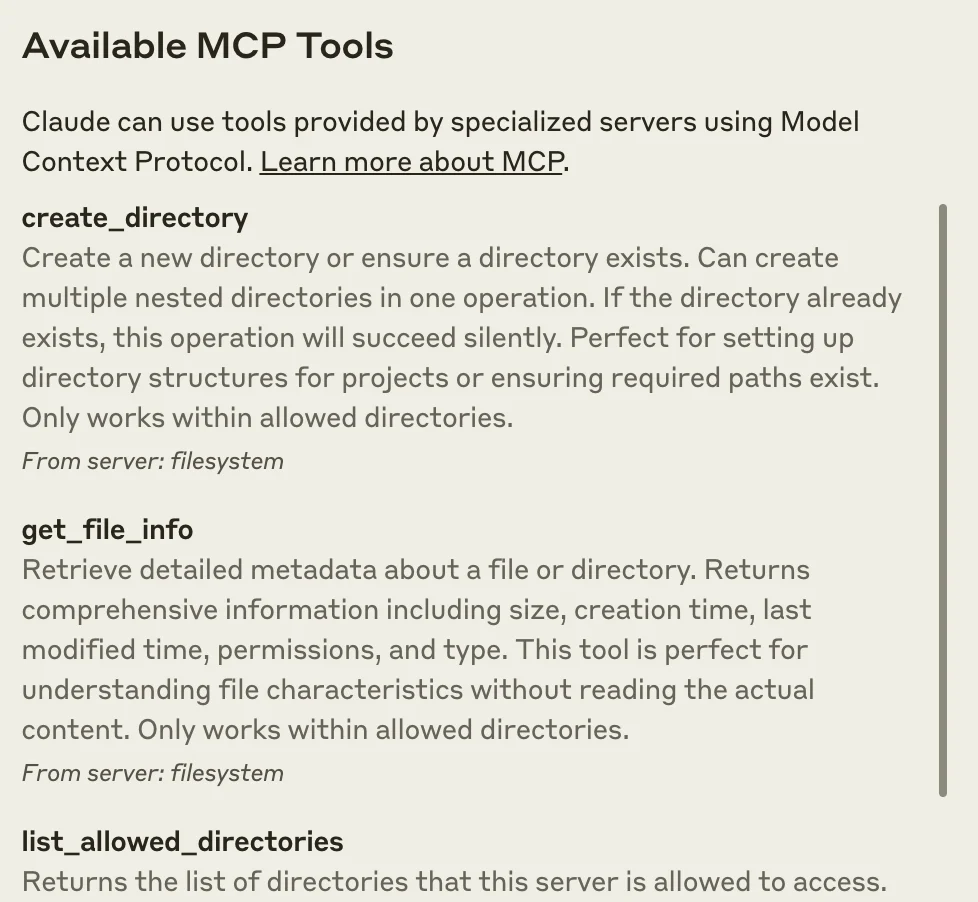 如果服务器指示器没有出现,请参考[排障](#troubleshooting)部分进行调试。
## 使用 Filesystem Server
连接 Filesystem Server 后,Claude 就可以与你的文件系统交互。可以尝试以下示例请求来探索能力:
### 文件管理示例
* **“你能写一首诗并保存到我的桌面吗?”** - Claude 会创作一首诗,并在你的桌面创建新的文本文件。
* **“我的下载文件夹里有哪些工作相关文件?”** - Claude 会扫描下载目录并识别工作相关文档。
* **“请把我桌面上的所有图片整理到一个叫 Images 的新文件夹里。”** - Claude 会创建文件夹并将图片文件移入其中。
### 审批如何工作
在执行任何文件系统操作之前,Claude 都会请求你的批准。这确保你能控制所有动作:
如果服务器指示器没有出现,请参考[排障](#troubleshooting)部分进行调试。
## 使用 Filesystem Server
连接 Filesystem Server 后,Claude 就可以与你的文件系统交互。可以尝试以下示例请求来探索能力:
### 文件管理示例
* **“你能写一首诗并保存到我的桌面吗?”** - Claude 会创作一首诗,并在你的桌面创建新的文本文件。
* **“我的下载文件夹里有哪些工作相关文件?”** - Claude 会扫描下载目录并识别工作相关文档。
* **“请把我桌面上的所有图片整理到一个叫 Images 的新文件夹里。”** - Claude 会创建文件夹并将图片文件移入其中。
### 审批如何工作
在执行任何文件系统操作之前,Claude 都会请求你的批准。这确保你能控制所有动作:
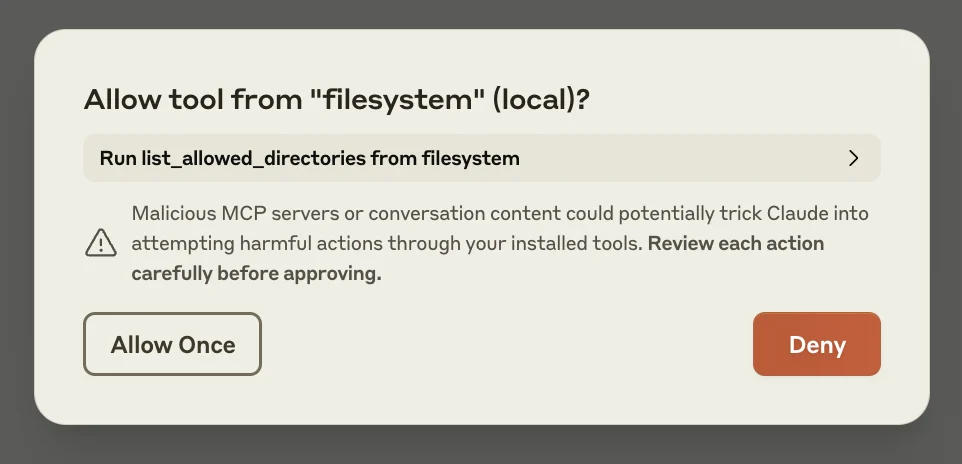 批准前请仔细检查每个请求。如果你不认可拟执行的动作,可以随时拒绝。
## 排障
如果在设置或使用 Filesystem Server 时遇到问题,以下方案可以处理常见情况:
1. 完全重启 Claude Desktop。
2. 检查 `claude_desktop_config.json` 文件语法。
3. 确保 `claude_desktop_config.json` 中的文件路径有效,并且是绝对路径而不是相对路径。
4. 查看[日志](#getting-logs-from-claude-for-desktop),确认服务器为什么没有连接。
5. 在命令行中尝试手动运行服务器(像在 `claude_desktop_config.json` 中一样替换 `username`),看看是否报错:
```bash macOS/Linux theme={null}
npx -y @modelcontextprotocol/server-filesystem /Users/username/Desktop /Users/username/Downloads
```
```powershell Windows theme={null}
npx -y @modelcontextprotocol/server-filesystem C:\Users\username\Desktop C:\Users\username\Downloads
```
Claude.app 中与 MCP 相关的日志会写入以下日志文件目录:
* macOS: `~/Library/Logs/Claude`
* Windows: `%APPDATA%\Claude\logs`
* `mcp.log` 包含 MCP 连接和连接失败的一般日志。
* 名为 `mcp-server-SERVERNAME.log` 的文件包含对应服务器的错误(stderr)日志。
你可以运行以下命令列出最近日志,并持续跟踪新增日志(在 Windows 上只会显示最近日志):
```bash macOS/Linux theme={null}
tail -n 20 -f ~/Library/Logs/Claude/mcp*.log
```
```powershell Windows theme={null}
type "%APPDATA%\Claude\logs\mcp*.log"
```
如果 Claude 尝试使用 tools 但调用失败:
1. 检查 Claude 日志中的错误。
2. 确认服务器可以无错误构建和运行。
3. 尝试重启 Claude Desktop。
请参考[调试指南](/docs/tools/debugging),其中提供更好的调试工具和更详细的指导。
如果已配置的服务器加载失败,并且在日志中看到路径里引用 `${APPDATA}` 的错误,你可能需要在 `claude_desktop_config.json` 的 `env` 键中加入展开后的 `%APPDATA%` 值:
```json theme={null}
{
"brave-search": {
"command": "npx",
"args": ["-y", "@modelcontextprotocol/server-brave-search"],
"env": {
"APPDATA": "C:\\Users\\user\\AppData\\Roaming\\",
"BRAVE_API_KEY": "..."
}
}
}
```
完成此修改后,再次启动 Claude Desktop。
**npm 应全局安装**
如果没有全局安装 npm,`npx` 命令可能会继续失败。如果 npm 已经全局安装,你会发现系统中存在 `%APPDATA%\npm`。如果没有,可以运行以下命令全局安装 npm:
```bash theme={null}
npm install -g npm
```
## 后续步骤
现在你已经成功将 Claude Desktop 连接到本地 MCP 服务器,可以探索以下选项来扩展设置:
浏览官方和社区创建的 MCP 服务器集合,获取更多能力
创建适配你特定工作流和集成需求的自定义 MCP 服务器
了解如何将 Claude 连接到远程 MCP 服务器,以使用基于云的工具和服务
深入了解 MCP 的工作方式和架构
批准前请仔细检查每个请求。如果你不认可拟执行的动作,可以随时拒绝。
## 排障
如果在设置或使用 Filesystem Server 时遇到问题,以下方案可以处理常见情况:
1. 完全重启 Claude Desktop。
2. 检查 `claude_desktop_config.json` 文件语法。
3. 确保 `claude_desktop_config.json` 中的文件路径有效,并且是绝对路径而不是相对路径。
4. 查看[日志](#getting-logs-from-claude-for-desktop),确认服务器为什么没有连接。
5. 在命令行中尝试手动运行服务器(像在 `claude_desktop_config.json` 中一样替换 `username`),看看是否报错:
```bash macOS/Linux theme={null}
npx -y @modelcontextprotocol/server-filesystem /Users/username/Desktop /Users/username/Downloads
```
```powershell Windows theme={null}
npx -y @modelcontextprotocol/server-filesystem C:\Users\username\Desktop C:\Users\username\Downloads
```
Claude.app 中与 MCP 相关的日志会写入以下日志文件目录:
* macOS: `~/Library/Logs/Claude`
* Windows: `%APPDATA%\Claude\logs`
* `mcp.log` 包含 MCP 连接和连接失败的一般日志。
* 名为 `mcp-server-SERVERNAME.log` 的文件包含对应服务器的错误(stderr)日志。
你可以运行以下命令列出最近日志,并持续跟踪新增日志(在 Windows 上只会显示最近日志):
```bash macOS/Linux theme={null}
tail -n 20 -f ~/Library/Logs/Claude/mcp*.log
```
```powershell Windows theme={null}
type "%APPDATA%\Claude\logs\mcp*.log"
```
如果 Claude 尝试使用 tools 但调用失败:
1. 检查 Claude 日志中的错误。
2. 确认服务器可以无错误构建和运行。
3. 尝试重启 Claude Desktop。
请参考[调试指南](/docs/tools/debugging),其中提供更好的调试工具和更详细的指导。
如果已配置的服务器加载失败,并且在日志中看到路径里引用 `${APPDATA}` 的错误,你可能需要在 `claude_desktop_config.json` 的 `env` 键中加入展开后的 `%APPDATA%` 值:
```json theme={null}
{
"brave-search": {
"command": "npx",
"args": ["-y", "@modelcontextprotocol/server-brave-search"],
"env": {
"APPDATA": "C:\\Users\\user\\AppData\\Roaming\\",
"BRAVE_API_KEY": "..."
}
}
}
```
完成此修改后,再次启动 Claude Desktop。
**npm 应全局安装**
如果没有全局安装 npm,`npx` 命令可能会继续失败。如果 npm 已经全局安装,你会发现系统中存在 `%APPDATA%\npm`。如果没有,可以运行以下命令全局安装 npm:
```bash theme={null}
npm install -g npm
```
## 后续步骤
现在你已经成功将 Claude Desktop 连接到本地 MCP 服务器,可以探索以下选项来扩展设置:
浏览官方和社区创建的 MCP 服务器集合,获取更多能力
创建适配你特定工作流和集成需求的自定义 MCP 服务器
了解如何将 Claude 连接到远程 MCP 服务器,以使用基于云的工具和服务
深入了解 MCP 的工作方式和架构